
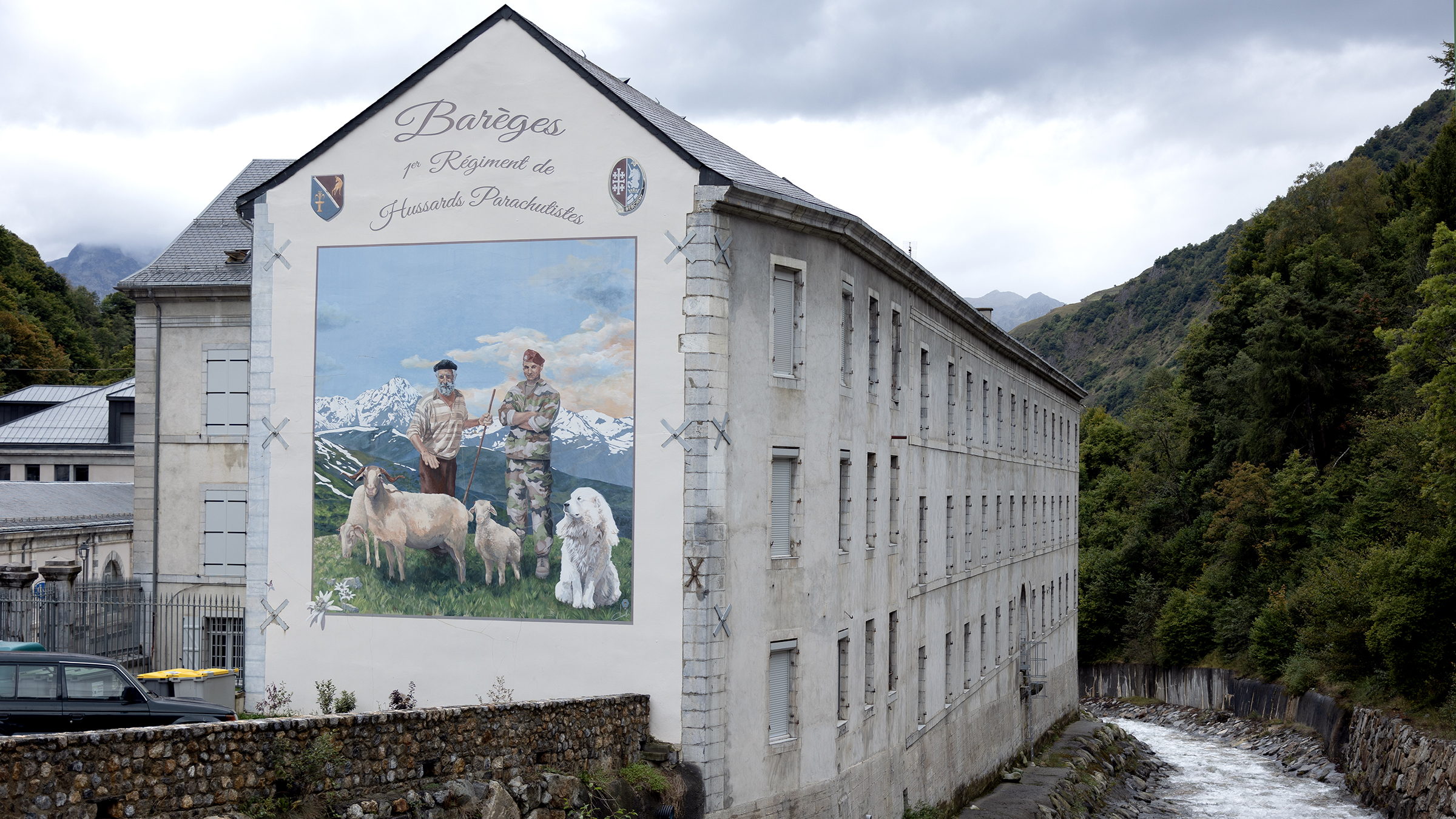
In the Pyrenees mountains
For all lovers of the Pyrenean mountain dog, the Pyrenees are a dream destination. The present and the past coexist here, and you can still see Pyrenean mountain dogs at work in all their splendour.
The Patou, symbol of the Pyrenees moutains
You can’t escape them, fortunately! In the Pyrenees, they are everywhere: Pyrenean Mountain Dogs, also known as Patous. Patou is the nickname for this breed, derived from the Old French word pastre, which means “shepherd”.
What the Saint Bernard is to Switzerland and the Swiss Alps, the Pyrenean Mountain Dog is to France and the French Pyrenees. The breed can be considered cultural heritage. And to this day, people are extremely proud of it.
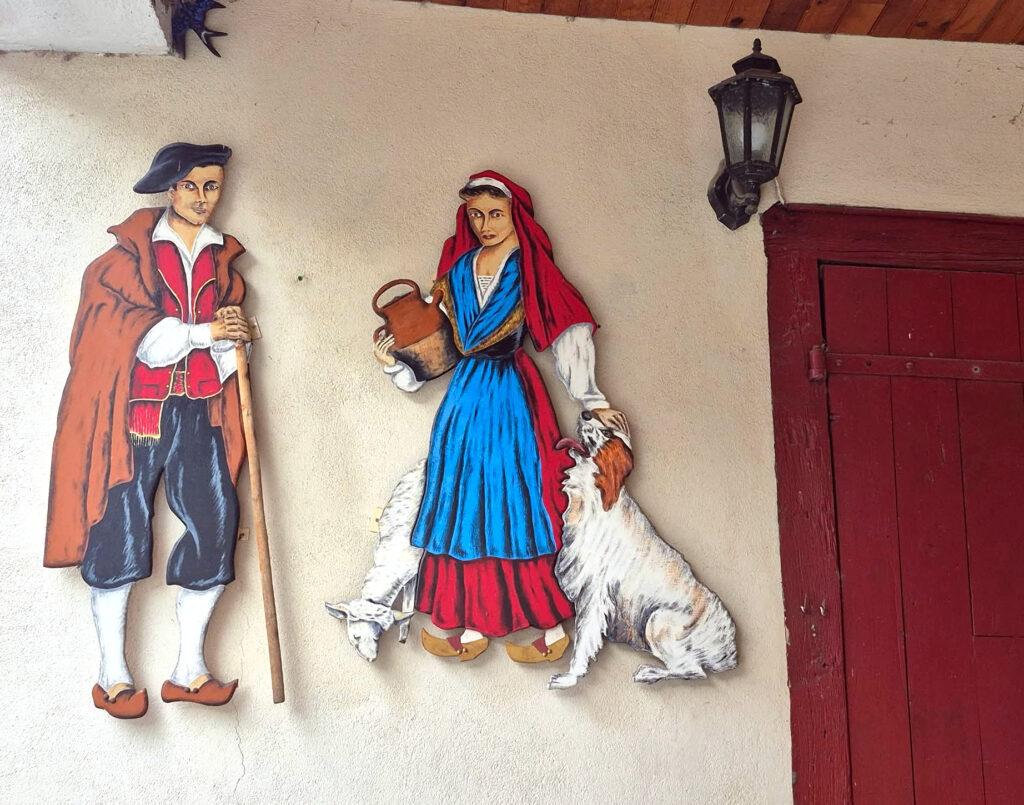
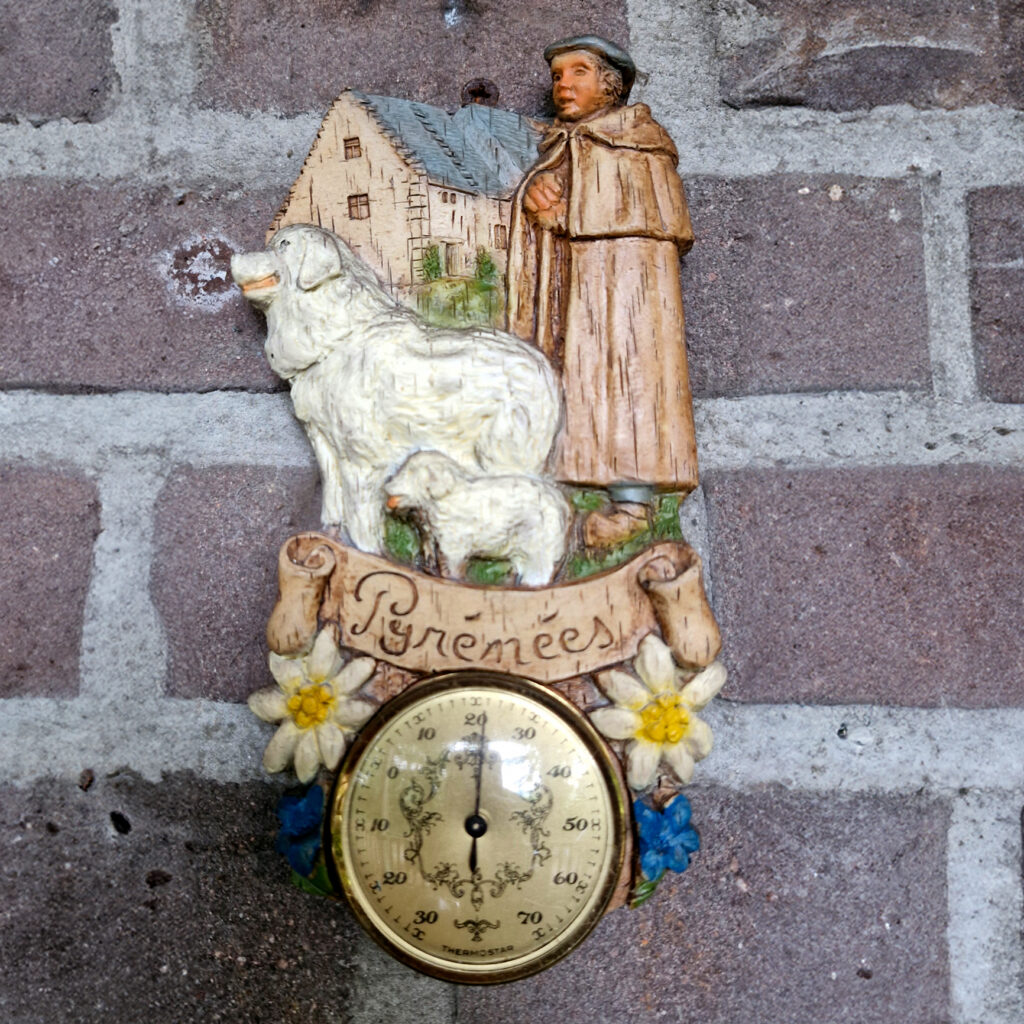
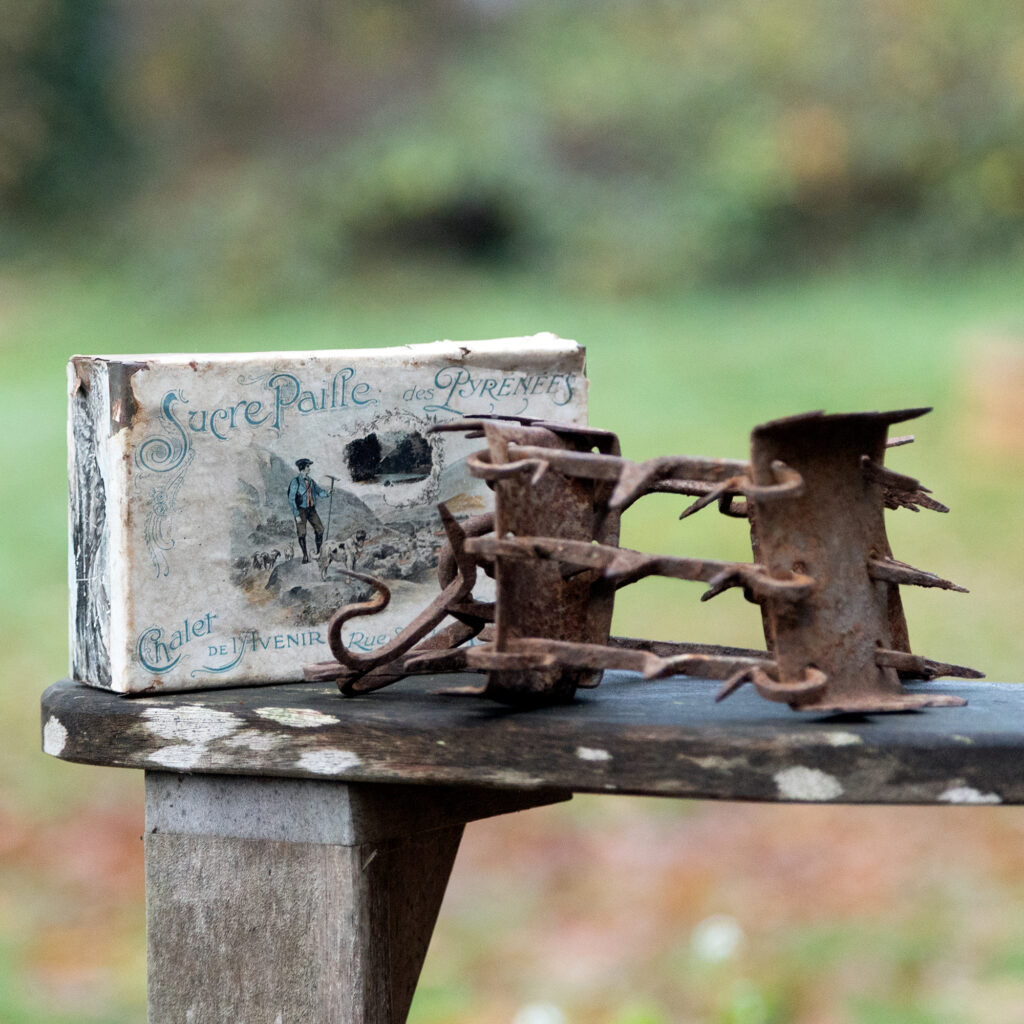
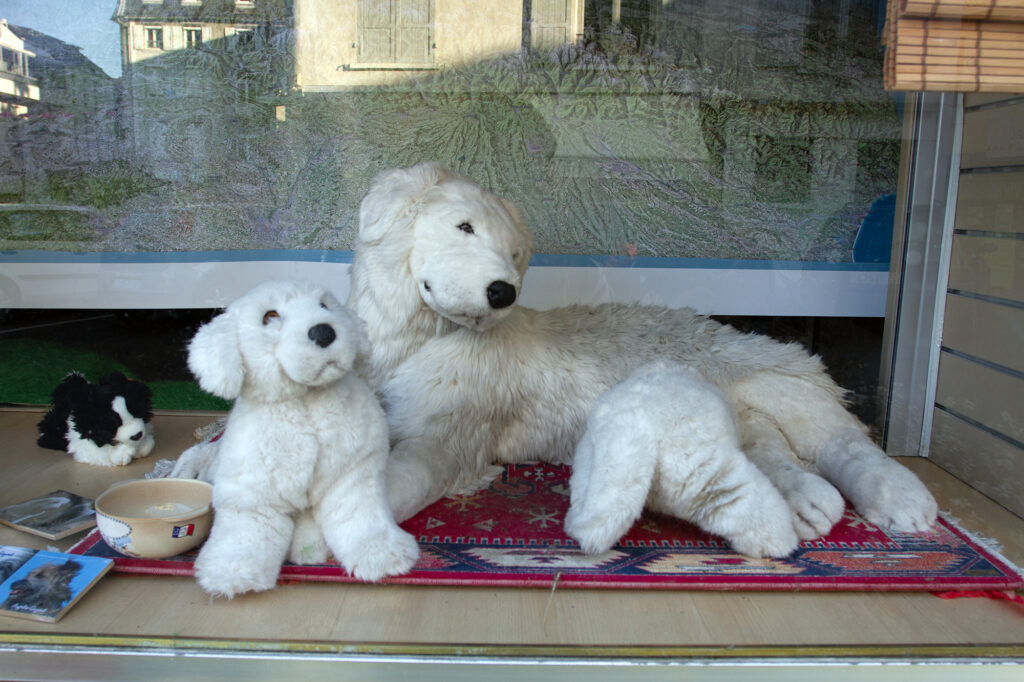
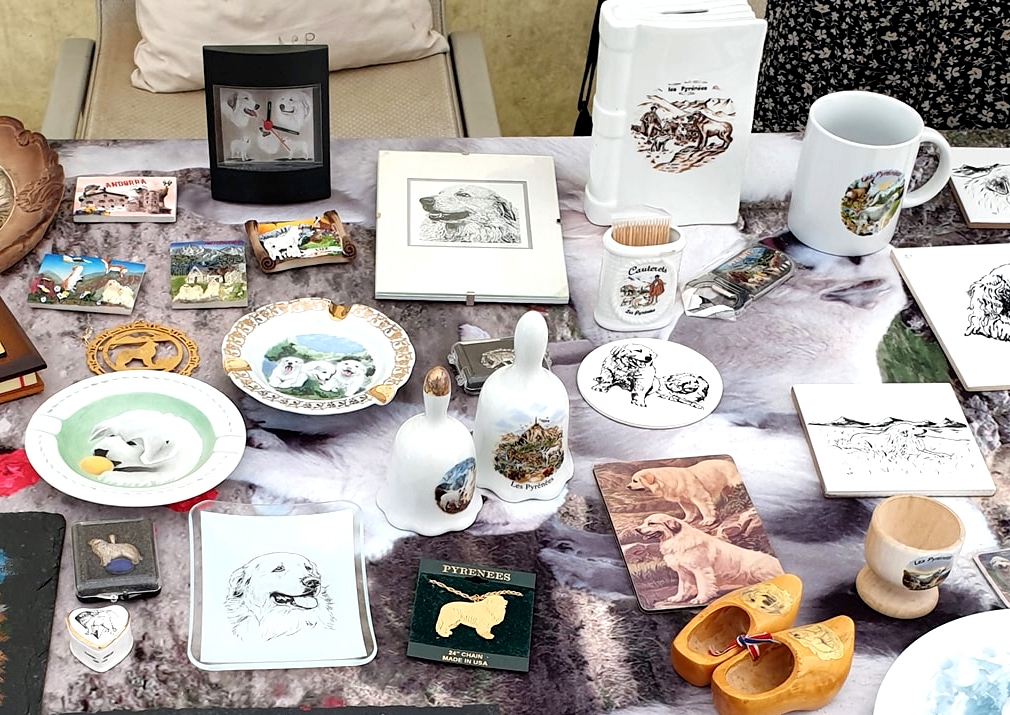
They are everywhere in the Pyrenees mountains. On the walls, on tea towels, pens, posters, salt shakers. But every now and then, a lucky person will find a hundred-year-old object in a second-hand shop or flea market.
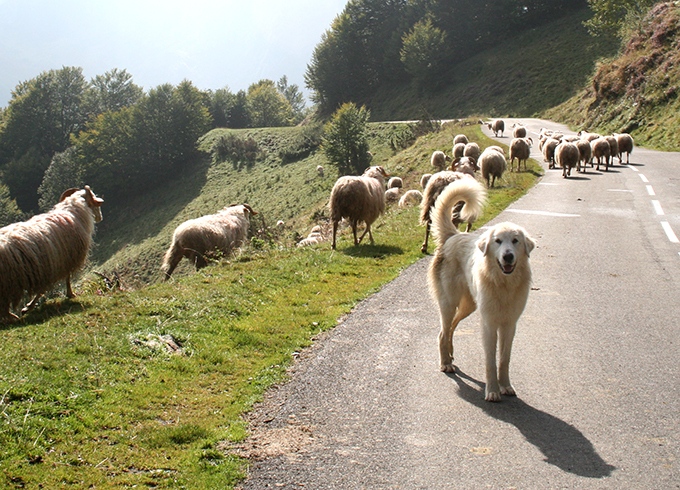
Fortunately, you can still encounter them in the mountains with the sheep. Encounters are not always avoidable when hiking, so it is important to follow the rules. The rules of the Pyrenean mountain dog, that is. A Patou is always alert and will always protect its flock. However, the Pyrenean Mountain Dog is not an aggressive dog. It will always try to avoid physical confrontation. Whether that succeeds depends on the intruder.
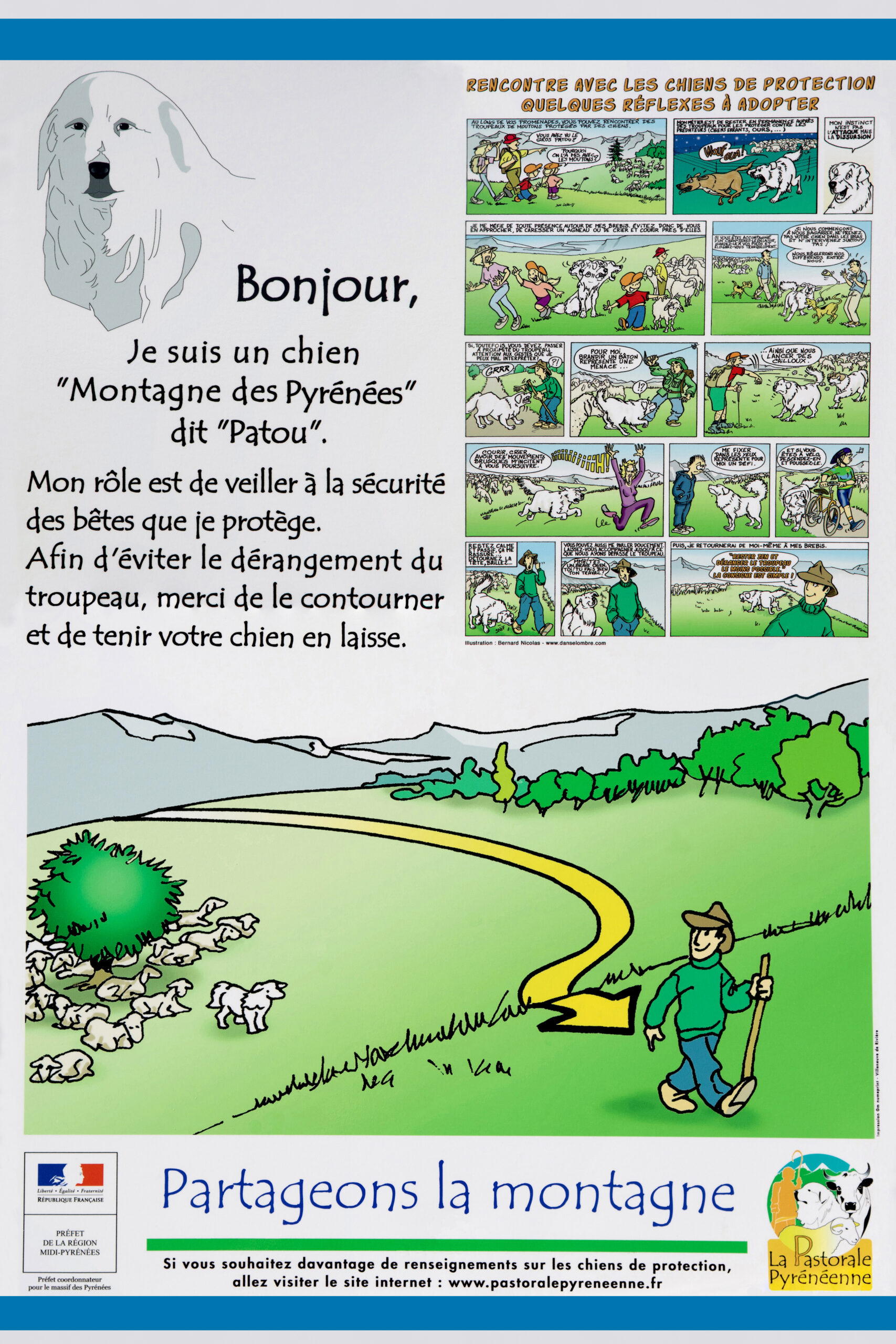
A Patou will place itself between the danger and its flock and try to convince the intruder to leave with a lot of noise and intimidating behaviour. If this happens, do as it says. There are warning signs everywhere indicating how to behave in the presence of a Patou at work. For a Pyrenean mountain dog, it is sufficient for the danger to disappear. It will not chase after the intruder.
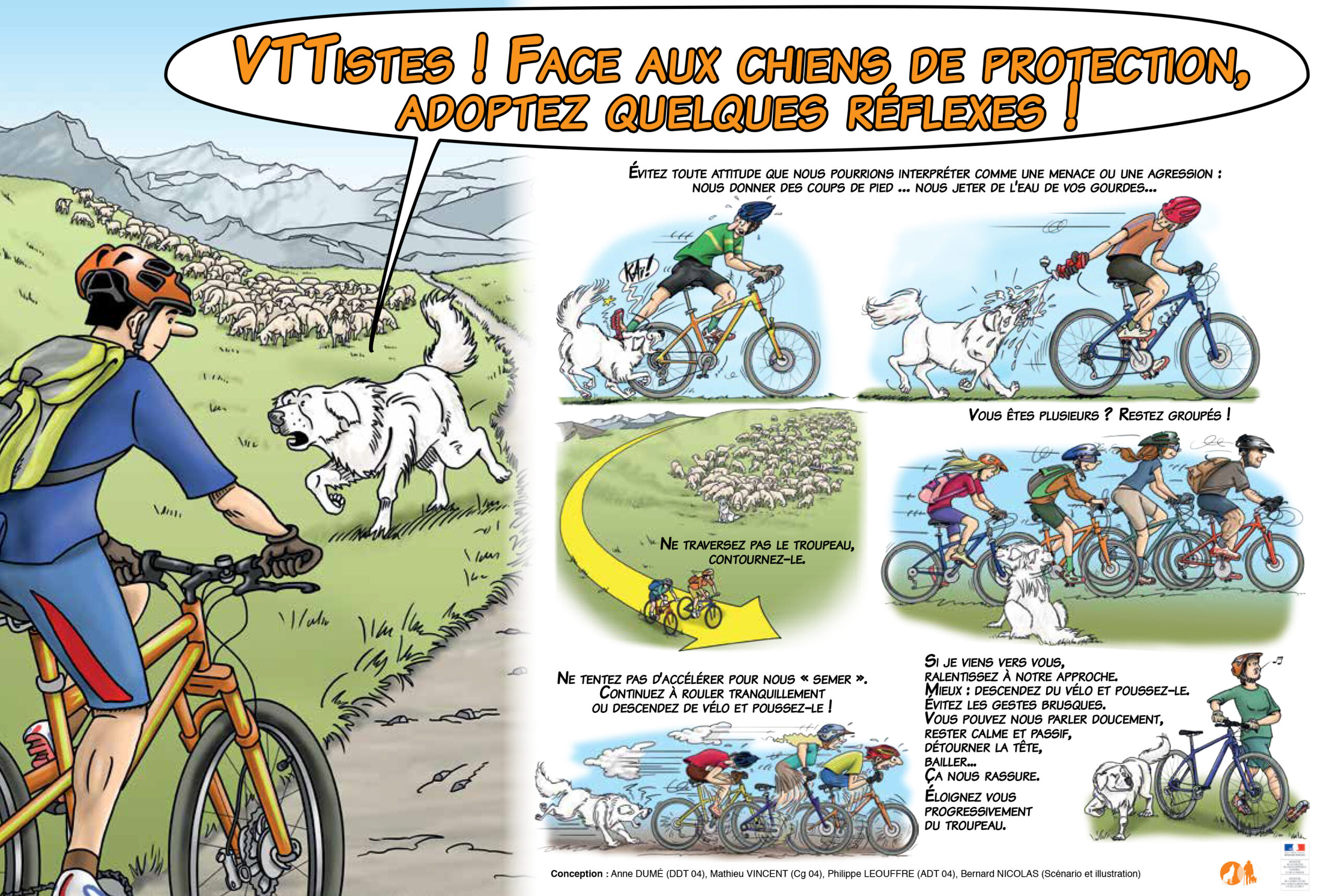
Do not walk through the herd, but take a route around it. Keep your own dog on a leash. Do not run, but walk calmly. Get off your bicycle and walk past the herd.
Still part of life in the Pyrenees mountains
Protection of the flock
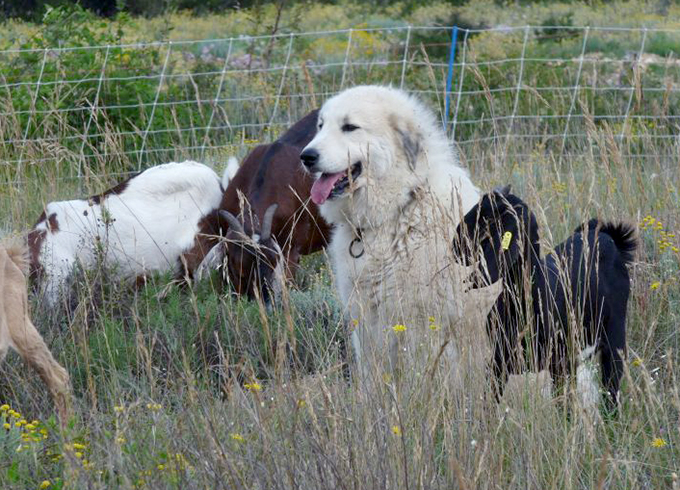
In the rugged Pyrenees, flocks of sheep and goats live in areas where predators such as wolves and sometimes even bears are present. The Pyrenean mountain dog, also known as the Patou, has been a loyal protector of these flocks for centuries. These dogs are large, strong, courageous and independent. They must be able to deter predators and, if necessary, defend the flock.
They often work in packs to keep the flock safe, taking turns to rest. Pyrenean mountain dogs are not aggressive by nature; they are bred to be a deterrent. Their natural reaction is to place themselves between the flock and an intruder, forming a barrier. By barking and marking their territory with scent trails, they create a safety zone that usually keeps predators at bay. In this way, they try to avoid direct confrontation, which is safer for both the flock and the predators.
A good livestock guardian must be strong and courageous, but also intelligent and independent. He must recognise danger and act sensibly, even in difficult circumstances. In addition, toughness is important: working for days on end in rain, cold and wind. A thick, natural coat that requires little grooming, strong teeth and a robust body are essential. And above all: a strong bond with the shepherd. These dogs are not replacements for the shepherd, but helpers and companions.
Origins of the Patou
The Pyrenean mountain dog is the result of centuries of selection by shepherds. Generation after generation, only dogs that did their job well – protecting the flock – were kept for breeding. Dogs that were too aggressive, did not guard, or had physical problems were excluded. This resulted in a breed that is not only strong and courageous, but also hardy and reliable.
Since 1923, there has been an official breed standard, which helps to keep the breed recognisable and healthy. At the same time, we know that a dog’s true character is not only determined by its physical characteristics, but also by its behaviour and functionality. That is why there is room for dialogue: how do we combine the preservation of breed purity with the practical requirements of the work? Both perspectives have the same goal: strong, healthy dogs that can perform their tasks well.
From puppy to livestock guardian
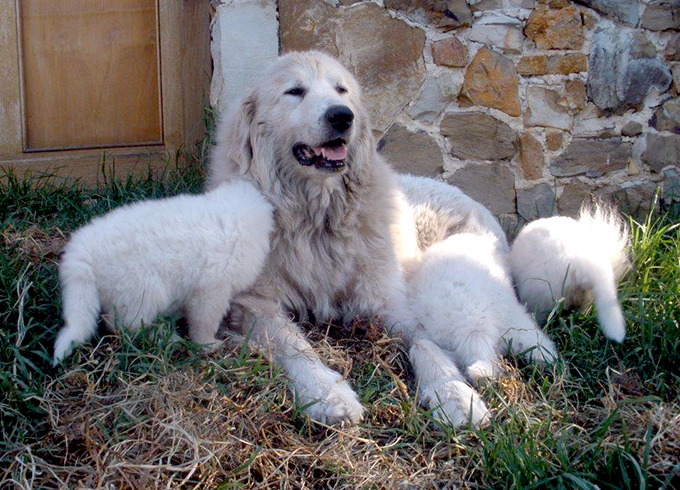
A puppy may have a good foundation, but without the right training, it will not become a reliable working dog. The first few weeks are crucial. Puppies must learn to interact with people, animals and different situations. Socialisation is important.
Being born into a flock helps, but it is not enough. The puppy must learn its role: to protect without excessive aggression, to warn by barking when danger threatens, but not to make unnecessary noise. Good training lays the foundation for a dog that can work independently, but also acts sensibly.
It is also the breeder’s job to determine which puppies have the best aptitude. Independent, adventurous puppies that are spontaneously drawn to animals are ideal candidates.
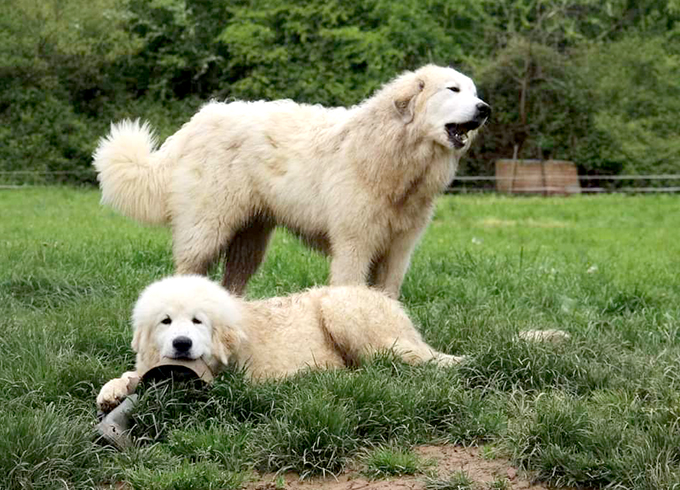
A young dog cannot yet protect a herd. Learning is much easier when he works together with adult dogs. He needs contact with other dogs and must play regularly to expend his energy.
Introducing guard dogs to a herd is a process that takes time – often four years – before the dogs can be used effectively. It is not simply a matter of “adding dogs”.
We share the mountains
The Pyrenees mountains attract many hikers and tourists. A livestock guardian sees anyone who comes too close to the sheep as a potential threat. That is his job. This can be intimidating for hikers, especially if the dog barks or blocks the path.
Pyrenean mountain dogs have no reason to attack hikers if they remain calm and keep their distance from the flock. Problems mainly arise when people walk through a flock or bring their dog with them. That is why it is important for hikers to know: keep your distance, do not walk through the flock, and do not try to pet the dog.
It is also important that breeders and shepherds teach puppies how to interact with people. A dog that is accustomed to human presence is less likely to overreact.
‘…You’re not being tough when you ignore a Patou, you’re being sensible when you respect him….’
In France, but also in other countries, there is debate about herd protection dogs, especially in tourist areas. They are sometimes seen as a threat to recreation and the economy, while in fact they are essential for protecting herds from wolves, bears and stray dogs. In France, solutions are being worked on, such as behaviour tests and better information for tourists.
The key lies in clear information and respect. Walkers need to know that they should keep their distance from flocks, remain calm and not try to pet the dogs. In many areas, there are signs with explanations, and shepherds sometimes provide information themselves. This allows people to pass the flocks safely, without causing stress to the animals.
We would like to point out that widely publicised incidents, particularly in the Alps, almost never involve Pyrenean mountain dogs. There are many crossbreeds working in the area. Not every white dog is a Pyrenean mountain dog. In addition, the term “Patou” is used, particularly in the Alps, as a general term to refer to any livestock guard dog. However, this is not correct. As described earlier, Patou is the old French nickname for the Pyrenean mountain dog.
Every year on the third weekend of September, the mountain village of Argelès-Gazost hosts the ‘Pyrenean Dog Festival’. Lovers of Pyrenean breeds, which are used to herd and guard livestock, come here from far and wide. The Pyrenean mountain dog and the Pyrenean shepherd dog can be seen in large numbers. Some of their Spanish brothers also come: the Pyrenean Mastiff and the Catalan Shepherd.
On Saturday, a well-attended and busy procession takes place through the village, concluding with a speech by the mayor, who helps to hand out drinks provided by the tourist office.
In 2023, the French breed association Réunion des Amateurs de Chiens Pyrénéens (RACP) celebrated its centenary, and for the occasion, there was a dress code from the time of its founding, the Roaring Twenties. No fewer than 406 dogs from 16 different countries were registered for the RACP’s big club show, including 168 Pyrenean mountain dogs. Below you can watch a video of that weekend.